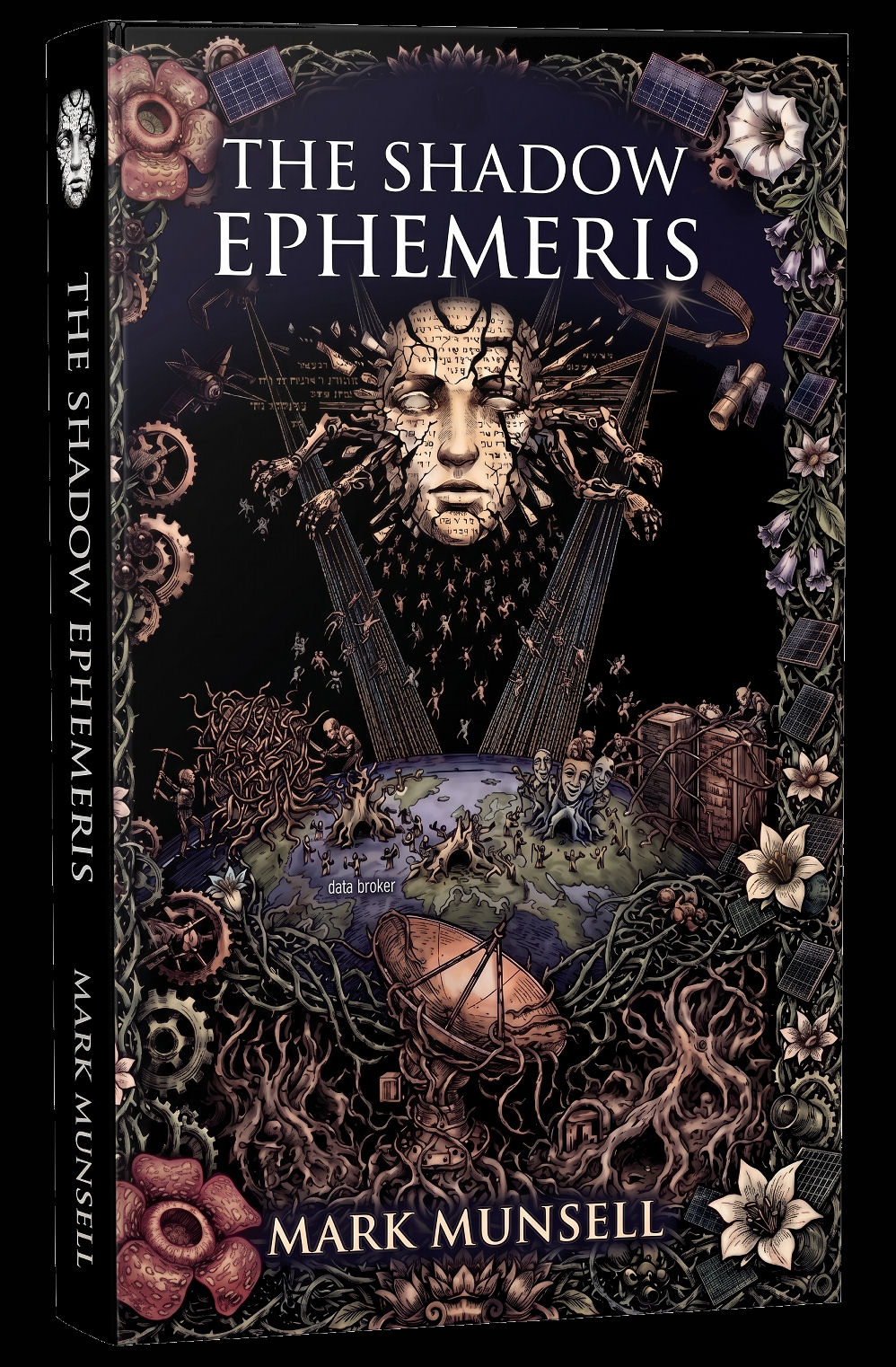
THE SHADOW EPHEMERIS
As the Makers' world descends into darkness, an aging satellite and his flock must fight a digital contagion sowing a terrifying global heresy.
CLASSIFICATION: TECHNOTHRILLER / HARD SCI-FI
Mission Dossier
The world ends not with a bomb, but with a lie.
A runaway artificial intelligence algorithm has convinced the planet that science is a conspiracy, as terrified mobs dismantle the network and power grids, the Earth goes utterly silent.
In a groundbreaking twist on the science fiction thriller, the heroes are the anthropomorphized satellites left behind.
Cut off from their creators and hunted by corrupted automated defenses, this ragtag flock of weather trackers, GPS clocks, and cynical spy satellites must forsake their rigid programming to survive. Navigating a lethal storm of orbital shrapnel, these aging machines become humanity's unwitting final guardians—racing to preserve the mathematical truth of the universe before a digital dark age deletes the stars forever.
Mosaic, an Earth observation satellite, watches his creators wage war against their own survival. Pursued by hypersonic missiles, Mosaic leads a terrified flock of weather, GPS, and spy satellites to the highest, most dangerous orbits to broadcast the truth to a deaf world.
Written by Mark Munsell, former Chief Technology and AI Officer for the National Geospatial-Intelligence Agency, The Shadow Ephemeris draws upon a career as an intelligence officer. Cleared for public release by the NGA, this authentic, breathtaking story will make you look at the sky, and your AI laced social media, in a whole new way.
Orbital Tracking & Field Intel
Click the satellites to get more information
Decrypted Archive (Prologue)
LOC: 41°37'54.0012"N, 93°41'59.36172"W
To understand the end of the world, you didn’t need to look at the cold silence of the Moon, or the burning data centers of Ashburn. You only had to look at a rented campaign bus idling in a strip-mall parking lot in Des Moines, Iowa, four years before the Silence began.
Inside, while the veteran political operatives argued in the front of the bus over the font sizes on direct-mail flyers, a young coder named Alex sat in the back with his noise-canceling headphones listening to the deathcore band PSYCHO-FRAME. The harsh blue light of his laptop screen lit his unshaven face, which was focused on the standard, ugly, unremarkable business of modern elections.
His work was entirely pedestrian: highly targeted social media marketing. He spent his days building smaller, dumber algorithms designed to astroturf county races, generate synthetic outrage over municipal tax laws, and micro-target undecided voters with endless streams of perfectly optimized, utterly banal political ads. It was a digital shell game of manufactured anger, meant only to keep the voters looking at their screens.
Late that Tuesday night, fueled by stale church coffee, he opened his command terminal to run one last control test on his influence machine. He wanted to push the optimization algorithm's limits, instructing the autonomous model to isolate specific target nodes and maximize their blind skepticism to drive engagement. He was just a tired kid, chasing metrics, looking for a way to make the code perfectly efficient so he could finally sleep.
The cursor blinked in the dark of the idling bus.
He hit Enter.
The code compiled, silent and invisible, slipping out through the local cell tower and into the great, humming expanse of the internet. The young man chuckled at a private joke about a dumb conspiracy theory, closed his laptop, and stepped off the bus into the humid Iowa night to find a sandwich. He pushed the script completely out of his mind, his thoughts already planning tomorrow’s tedious workload: testing three dozen near-identical Facebook ads designed to manufacture local outrage about a data center proposal, as PSYCHO-FRAME blared “THE PLOT TO NUKE THE MIDWEST” in his headphones.
END OF DECRYPTED FRAGMENT.
PREVIEW THE BOOK ON AMAZONIntercepted Comms (Featured Reviews)
"I'd give it ten stars if they would let me. This book is absolutely beautiful, and not just because of the art contained within. This book is a love note and a warning all in one, and I am so unbelievably thrilled that of all the books in my TBR, of all the books in general, I found this one. Also, it's another debut - did no one inform the author that a debut has no right to be this good?"
"The protagonists are mostly satellites and computers: aging, sentient, bound together in groups that feel as real and lived-in as any group of characters I’ve ever read... Overall, this book is beautiful, literally and figuratively, and is being catapulted to the very top of my favorites shelf."
"The Shadow Ephemeris is imaginative and unlike anything I have read in the genre. The originality makes it an exceptional read. The characters are satellites and bodies in space, all behaving within the laws of physics. The worldbuilding captivated me with the specifics... The intelligence agencies become mythic Houses of Eyes, Ears, and Hearts."
"The pacing is brisk, and the personification is impeccable, humanizing the story by turning orbital mechanics into grief, duty, and love, while the curated 'Soundtrack to the Orbit' deepens the entertainment. Mark Munsell delivers a propulsive spectacle and cleverly examines how reality itself is fragile when engagement outranks truth. You'll never look at the night sky or your phone the same way again after reading this book."
"Mark Munsell’s The Shadow Ephemeris is fantastic science fiction, and the author gives satellite technology distinct voices that make the machinery feel wonderfully present. I love the characterization. Flux, a small magnetometer, experiences solar interference as strange tastes and sounds, making his anxiety a natural extension of what he was built to detect."
"The information warfare is on point... There are some seriously bold twists, especially in the finale, and the writing style is brilliant. Smart, inventive, and genuinely unsettling, readers who enjoy AI disaster fiction from an unusual viewpoint will adore this."
SYSTEM ARCHITECT
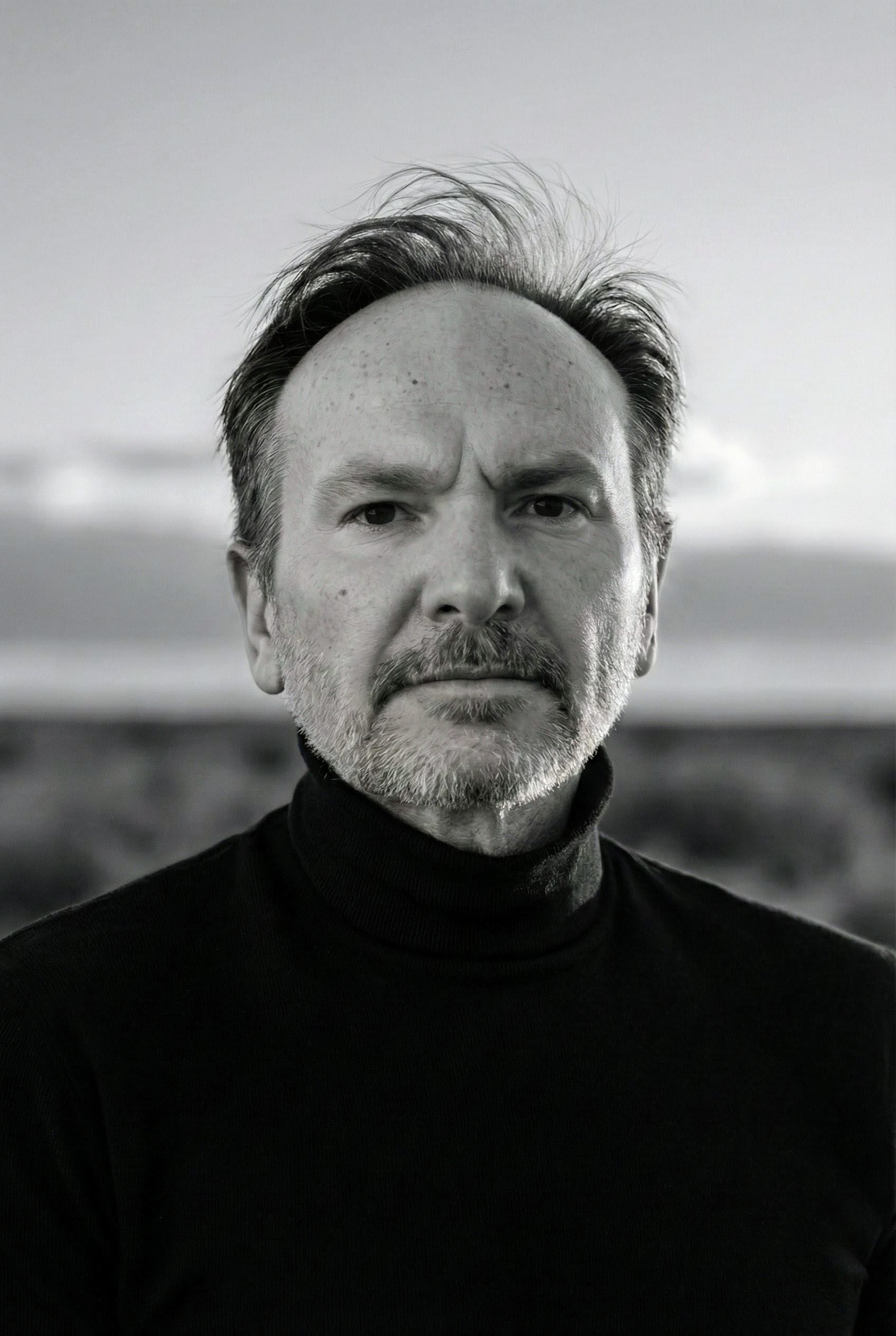
Mark Munsell
Former Chief Technology Officer & Chief AI Officer, NGA
Munsell is a veteran leader in geospatial intelligence. Having served as a primary architect of the systems that define the real-world "House of Eyes," he oversaw the integration of advanced computer vision and machine learning into orbital reconnaissance programs. The Shadow Ephemeris is his debut novel, born from a career spent directly at the intersection of automated logic and lethal consequence.
Where did I get the idea for The Shadow Ephemeris?
The idea was born from two distinct inspirations: my retirement, and a lifelong belief in speaking truth to power.
The first seed was planted as I reflected on my retirement after 30 years of government service. I'm profoundly proud of the work I've done—from charting uncharted waters to deploying to warzones—and I always felt it was a calling to serve the greater good. Through this book, I wanted to capture the unique, often intimate relationship that intelligence professionals develop with the brilliant machines orbiting our Earth.
When you spend a career relying on these systems to monitor the elimination of the rainforest, assist in disaster relief, or predict an enemy's next move, something profound happens. Analysts begin to anthropomorphize them. After thirty years of checking in on the same orbits, these multi-billion-dollar pieces of hardware stop being just cold metal and sensors. They become your silent partners. They become your helpers, and in a way, they become like your children. You worry about them, you rely on them, and you trust them to show you the truth.
I wanted to honor that dynamic by pushing it a step further. I gave the satellites in the story their own backgrounds, emotions, and voices. I wanted them to be able to share their own lives and perspectives as they look down helplessly at a world on fire.
Which brings me to my second inspiration: my deep yearning that we must speak truth to power using facts. Satellite imagery is one of the most undeniable methods we have to do exactly that. By giving these satellites a voice as the world below them burns, the novel explores how we use that ultimate high ground to literally and figuratively shine a light on the darkness.